Tiny Dog Big Act!

Naveen Kumar
| 30-04-2026
 · Animal Team
At first glance, the Pomeranian looks like a toy—lightweight, fluffy, and undeniably cute. Yet anyone who has spent time with one quickly realizes that this tiny dog carries itself with the confidence of a much larger animal.
From barking at strangers to fearlessly approaching bigger dogs, the Pomeranian often behaves as if size simply doesn’t apply. This bold personality isn’t random; it is deeply rooted in history, genetics, and psychology.
A Heritage Built on Larger Ancestors
The modern Pomeranian did not begin as a lap dog. It descends from the German Spitz family, a group of working dogs historically used for guarding, sled pulling, and herding in cold climates. Early ancestors were significantly larger—some weighing over 13 kilograms—and were bred for resilience and alertness.
Over time, selective breeding reduced their size, especially during the 18th and 19th centuries when European nobility favored smaller companion dogs. However, shrinking the body did not erase the original temperament. What remains today is a compact dog with the instincts of a much larger working breed. This mismatch between physical size and behavioral wiring explains much of their “big dog” attitude.
The Confidence of a Natural Watchdog
Pomeranians are exceptionally alert. Their ears pick up subtle sounds, and their eyes constantly scan their surroundings. Historically, this vigilance helped their ancestors guard property and warn humans of approaching threats. Today, that same instinct manifests as barking at unfamiliar noises or people.
This behavior is not simply noise-making—it’s communication. The Pomeranian genuinely believes it is performing a protective role. Because it lacks awareness of its small size, it reacts to perceived threats with full intensity. In its mind, it is doing exactly what it was bred to do.
Intelligence That Fuels Bold Behavior
Pomeranians are highly intelligent dogs, capable of learning commands quickly and adapting to new environments. This mental sharpness contributes to their assertiveness. A smart dog evaluates situations and makes decisions—sometimes independently of its owner.
When a Pomeranian stands its ground against a larger dog, it’s not necessarily reckless. It may be assessing confidence, territory, or social hierarchy. Their intelligence, combined with curiosity, encourages them to test boundaries. Without proper training, this can appear as stubbornness or overconfidence.
The “Small Dog Syndrome” Misconception
Many people describe bold small dogs as having “small dog syndrome,” but this label oversimplifies the issue. The behavior is often shaped by human responses. Owners may unintentionally reinforce assertiveness by picking up the dog when it barks or excusing behaviors they would correct in larger breeds.
Pomeranians quickly learn patterns. If barking leads to attention, or if growling makes a situation go away, they repeat it. Over time, these responses strengthen their dominant or fearless demeanor. What appears to be exaggerated confidence is often a learned behavior layered on top of natural instincts.
Physical Presence and Illusion of Size
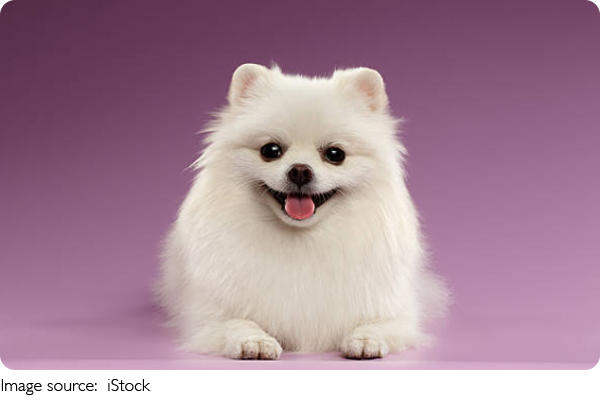
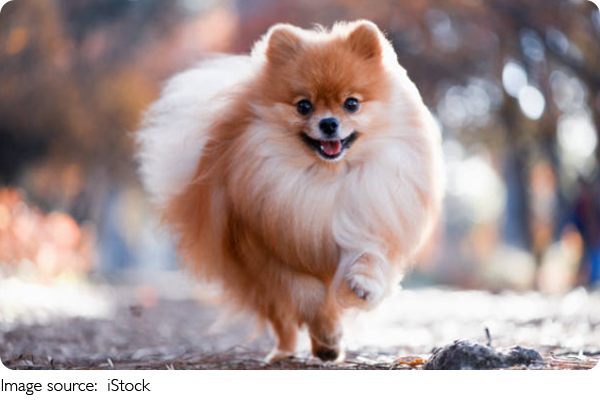
The Pomeranian’s thick double coat plays a surprising role in its perceived “bigness.” When alert or excited, the fur stands outward, making the dog appear larger than it actually is. This visual illusion can influence both the dog and those around it.
From an evolutionary perspective, appearing larger is a survival advantage. Many animals use similar tactics—fluffing fur, raising feathers, or expanding posture—to deter threats. The Pomeranian instinctively uses its coat and posture to project confidence, reinforcing its bold personality.
Social Behavior and Territorial Instincts
Despite their size, Pomeranians often develop strong territorial instincts. They form deep bonds with their owners and living spaces, which they may feel compelled to protect. This can result in guarding behavior, especially around visitors or unfamiliar animals.
Interestingly, their social boldness doesn’t always translate to aggression. Many Pomeranians are friendly and affectionate but will still assert themselves when they feel their environment is challenged. This duality—loving companion and vigilant guard—adds to their larger-than-life presence.
The Role of Early Training and Socialization
While much of a Pomeranian’s personality is inherited, early experiences shape how that personality is expressed. Puppies exposed to various people, environments, and other animals tend to develop balanced confidence rather than unchecked boldness.
Consistent training teaches them boundaries without suppressing their natural spirit. Commands like “quiet,” “stay,” and proper leash behavior help channel their energy into controlled actions. Without guidance, their confidence can turn into excessive barking or confrontational behavior.
Why Their Big Personality Endures
The Pomeranian’s boldness is not a flaw—it’s a reflection of its lineage and adaptability. These dogs were never meant to be passive ornaments. Even as companions, they retain the drive, awareness, and courage of their ancestors. What makes them truly fascinating is this contrast: a small frame housing a personality that refuses to be limited. Their behavior challenges expectations, reminding us that physical size does not define presence or influence.
A Pomeranian doesn’t act big because it’s pretending—it acts big because, in its mind and history, it truly is. And once you understand that, every confident bark and fearless step feels less like attitude and more like a legacy still alive in a tiny, unforgettable form.