Whales Have Their Own Voices

Ethan Sullivan
| 09-09-2026
 · Animal Team
Whales live in an environment where sound can be more important than sight. In dark or murky waters, calls help them stay connected, locate food and coordinate with one another.
Researchers are now using underwater microphones, drones and artificial intelligence to study these sounds in greater detail, and the results are changing the way we think about animal communication.
Belugas Learn to Communicate
Belugas are among the most vocal whales, producing clicks, whistles, squeals and trills. Their calls are especially important in Arctic waters, where visibility can be extremely limited.
Research led by cetacean specialist Valeria Vergara suggests that young belugas do not simply begin life with a fully developed communication system. Like human children, they spend years learning how to use sounds effectively. Calves experiment with vocalisations and gradually develop a broader and more refined repertoire.
One of the first sounds they learn functions like an individual identifier. However, calls produced by young belugas travel much shorter distances than those made by adults. This means that noise from boats can make it more difficult for mothers and calves to hear one another, particularly in large groups.
That finding has practical consequences. In Canada, research into beluga communication has already contributed to restrictions on boat traffic in important gathering areas.
Whales Also Have Dialects
Many whale populations use distinctive sound patterns that are learned socially. These differences can function almost like regional dialects. Researchers have also found that vocal traditions may be linked to other behaviours, including migration routes and feeding habits.
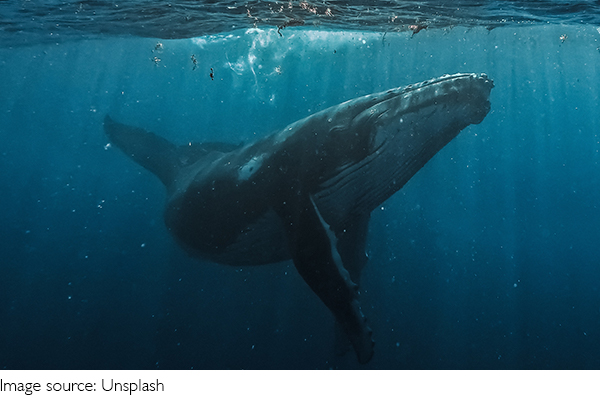
Humpback whales provide one of the clearest examples. Males sing long, structured songs made up of repeated phrases and themes. These songs change over time, and entire populations can adopt new versions from neighbouring groups.
Remarkably, a new song can spread across vast areas, moving between populations until large numbers of whales are effectively singing the same updated version.
Whale Groups Have Their Own Identities
Some deep-diving whales communicate through distinctive patterns of clicks known as codas. Different social groups, or clans, share particular combinations of these sounds. Researchers have identified specific codas that are strongly associated with individual clans, making them useful for distinguishing between different populations.
These acoustic signatures may also help scientists understand where particular groups travel and whether their behaviour makes them especially vulnerable to environmental change. Because these whales live in highly social communities, their calls appear to play an important role in maintaining relationships and group identity.
Artificial Intelligence Is Listening
One of the most ambitious projects in this field is Project CETI, which uses machine learning to analyse complex whale communication. By examining enormous collections of recorded clicks, researchers are looking for repeated structures, shifts in rhythm and patterns that may be connected to specific situations.
Some findings suggest that whales alter elements of their calls when ships are nearby. Other research has revealed surprisingly complex acoustic structures that challenge simple assumptions about how animal communication works.
Scientists remain cautious about describing whale communication as language in the human sense. Similarity does not automatically mean equivalence.
Understanding Before Speaking
The ultimate goal is not necessarily to hold conversations with whales. Playback experiments, in which recorded calls are transmitted back to animals, can interfere with natural behaviour and may cause stress. For that reason, many researchers argue that careful observation and listening are more valuable than trying to force interaction.
Information gathered from whale sounds can already help scientists identify populations, detect behavioural changes and understand how human-generated noise affects social interaction.
Understanding Before Speaking
The ultimate goal is not necessarily to hold conversations with whales. Playback experiments, in which recorded calls are transmitted back to animals, can interfere with natural behaviour and may cause stress. For that reason, many researchers argue that careful observation and listening are more valuable than trying to force interaction.
Information gathered from whale sounds can already help scientists identify populations, detect behavioural changes and understand how human-generated noise affects social interaction.
Whale communication may eventually teach us more about language, culture and social learning. More immediately, however, it offers a powerful tool for conservation.
By understanding how whales depend on sound, researchers can develop protections that are better matched to the animals’ actual needs and, in turn, make the oceans safer for some of their most social inhabitants.